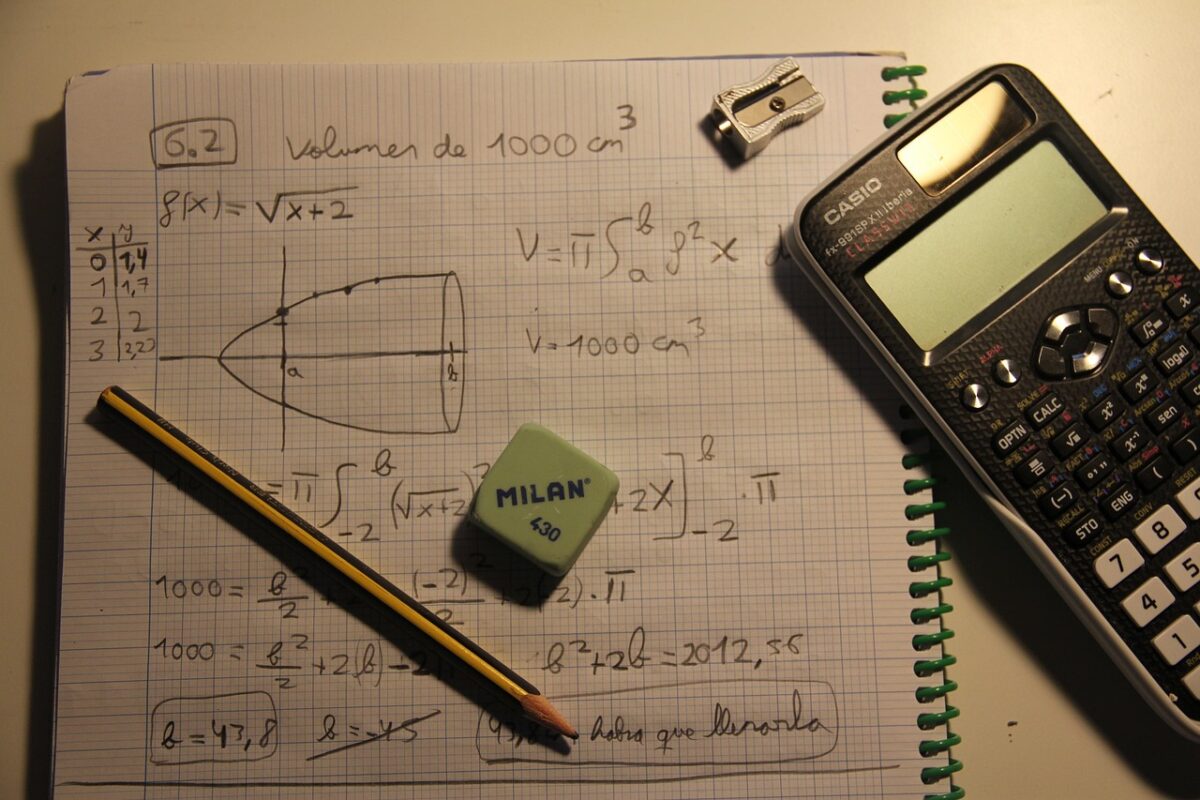
Every August we get the same question at the counter, usually with a syllabus sheet in hand: is this the right calculator? The answer is almost never about the category — scientific, graphing, financial — and almost always about the exact model number. Boards approve and prohibit by model.
Read the model number, not the shelf label
Manufacturers use model families that look interchangeable and are not. The clearest example is the Texas Instruments TI-30 family:
- TI-30Xa — a one-line display scientific calculator.
- TI-30X IIS — two-line display, shows the entry and the result together.
- TI-30XS MultiView — four-line display, shows fractions in textbook form.
- TI-34 MultiView — four-line, with additional functions aimed at middle grades.
These are four different calculators with similar names, sold beside each other, at similar prices. A class list specifying one of them means that one. Every listing on this site names the exact model in the title for this reason.
The three questions an exam rule is really asking
Most published calculator rules reduce to three checks.
1. Is it programmable?
Can the user store a sequence of steps and replay them? Most standard scientific calculators cannot. Graphing calculators generally can. Where an exam bans programmable calculators, it is this capability being excluded.
2. Does it do symbolic algebra (CAS)?
A CAS calculator manipulates algebra symbolically — it can factor an expression or solve for x and return an exact answer rather than a decimal. The TI-Nspire CX II CAS has this; the non-CAS version of the same machine does not. Many exams that allow graphing calculators specifically exclude CAS models, and the two look identical apart from the word on the case.
3. Does it have a QWERTY keyboard or communication?
Some boards exclude calculators with alphabetic keyboards, or with infrared, Bluetooth or wifi. This rules out certain graphing models on grounds unrelated to their mathematics.
Where to check
Check the exam board’s own published list, and check the version for the year you are sitting. Lists change. A model approved two years ago may have been withdrawn, and — more often — a new model may not yet appear on a list that has not been updated, which is its own problem.
If a school has issued a class list, follow the class list. Teachers teach keystrokes, and a student with a different model spends the first term translating.
Buy the one the class uses
This is worth stating plainly. A more capable calculator is not an advantage if the teacher is demonstrating a menu that your machine does not have. The four-line MultiView display is genuinely easier for fractions, but not if everyone else is working from a two-line TI-30X IIS and the worked examples on the board show two lines.
Practical points beyond the rules
- Solar plus battery beats solar alone. Exam halls are not always brightly lit, and a solar-only machine dims in poor light.
- A hard slide case matters. Calculators live in bags with keys.
- Buy it early. A calculator first used in the exam hall is a calculator whose menus you do not know.
- Clear the memory before the exam where the rules require it, and know how — it is usually a documented key sequence.
Teacher packs and multi-packs
Several models are sold in multi-packs intended for classrooms. They are the same calculator; the difference is packaging and sometimes colour. If you need one unit, a multi-pack is not a saving.
If you are unsure
Bring or send us the exact wording from the syllabus and we will tell you which of the models we stock matches it. We will also tell you if none of them does — that is more useful than a sale.
Browse Scientific Calculators and Graphing Calculators, or contact us with the requirement.